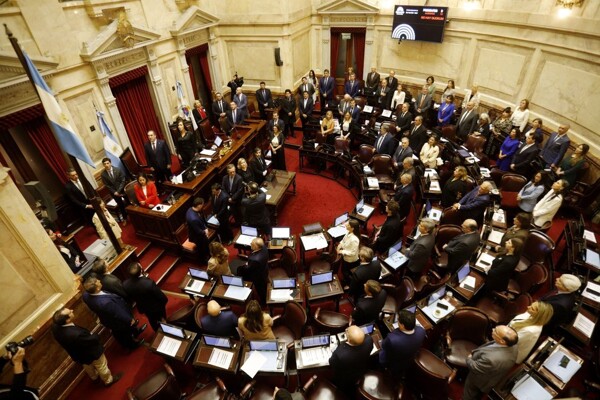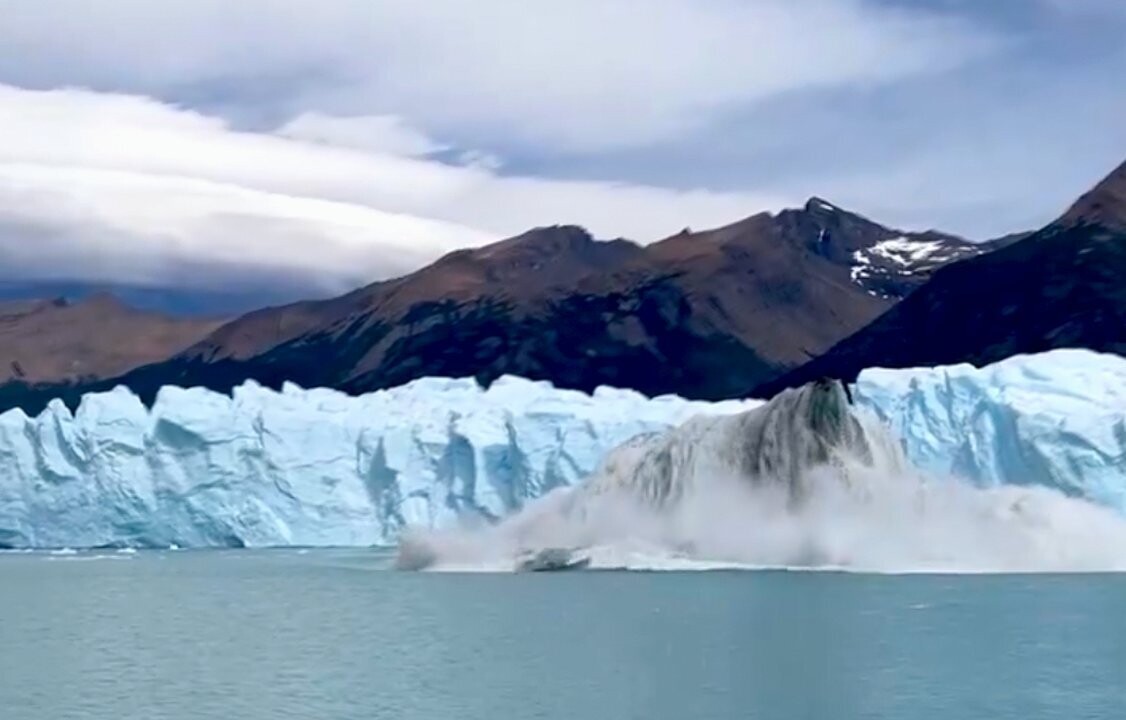
In Buenos Aires, the debate on the modification of the Glaciers Law (26.639) will take place this Thursday, where the Government will redefine the protection of the periglacial environment to attract projects linked to mining and hydrocarbons, not without controversy or resistance from environmental sectors. In the Senate, La Libertad Avanza (LLA) will seek to modify key articles that safeguard water importance to give provinces greater power over their own resources, according to the Argentine News Agency. Similarly, it is proposed to recognize the original domain of natural resources to the provinces, a right enshrined in article 124 of the National Constitution after the 1994 reform. The rejection. Opposition blocs, such as most of the Justicialist legislators, reject the initiative because it would eliminate the ban on activities that may affect the natural condition of glaciers and river basins, considered reserves of drinking water, and would therefore affect a vital resource for the population. While the ruling party seeks to enable mining-linked projects and facilitate economic development for hydrocarbon companies, the Peronist bloc defends the preservation of freshwater reserves intended for human consumption, the main objective of the current law. However, the LLA bloc in the upper house stated that the current regulation generates 'legal insecurity and paralysis of investments' and, with this amendment, they seek to restrict protection only to those glaciers that 'fulfill an effective and strategic water function' and, at the same time, allow productive activities in protected areas. They also pointed out that if approved, the provinces will have greater autonomy to decide on their natural resources, a demand shared by territories with possible lithium and copper exploitation, such as San Juan, Catamarca and Jujuy. History of a conflict. Since last year, when it was announced that this project would be debated in extraordinary sessions, it was learned that the Peronist senators representing those provinces would be 'under pressure' within their own bloc, as the current law hinders mining projects and generates some controversy over whether to position themselves in favor of productive development or the environment. For the moment, it has been hinted that they will avoid a reform that completely eliminates the law and will seek a document that prioritizes environmental protection, without leaving aside economic development, although provincial positions divide the inter-bloc. The positions. The president of the Justicialist bloc (PJ), José Mayans, maintains a critical position, which aligns with union sectors and seeks to protect water resources. The Civic Coalition rejects the modifications promoted by the Government on the Glaciers Law. Although Peronism, for the most part, questions the proposed reform, there are senators from mining provinces such as San Juan and Catamarca who support stronger restrictions in protected areas to allow the projects they intend to carry out. The official letter. The current law establishes broad protection that safeguards both glaciers and the periglacial environment, such as frozen soils that also regulate water, and prohibits activities that affect their integrity, specifically mining and hydrocarbon exploration in the affected areas. The senators who support the modification argue that they seek to provide 'technical certainty' to reconcile economic development with environmental protection, without eliminating audits. The opposition's alternative project. National Deputy Eduardo Valdés (Union for the Fatherland) presented a few weeks ago a 'counter-project' aimed at strengthening the Minimum Budgets Protection Regime for Glaciers and the Periglacial Environment. On the eve of the vote in the Senate, Valdés presented a glacier defense project. The initiative arose as a response to the national executive's project that seeks to facilitate mining and hydrocarbon exploitation in protected areas. In principle, it proposes to restrict mining and industrial activity in glacier and periglacial areas; ensure that water from these formations is a strategic natural resource of national interest and, for that reason, prioritize its preservation for human consumption and irrigation over any economic interest. Additionally, it proposes the periodic updating of the National Glacier Inventory to ensure constant scientific monitoring of water resources and to define the protection of glaciers as a matter of sovereignty and rights of the peoples that depend on these basins in the face of climate change.